Preparing for the UPSC CSE (Civil Service Examination) requires a thorough understanding of the syllabus, especially when picking an optional subject. For aspirants eyeing the civil services, mastering the economic landscape is vital. You can review general expectations through the broader UPSC syllabus guidelines. This guide outlines the detailed UPSC IAS Economics optional subject syllabus for Paper 1 and Paper 2, along with expected question weightage, marks distribution, and FAQs.
Whether you are evaluating your strengths alongside the UPSC Prelims Syllabus 2025- Click Here or reviewing the detailed UPSC Syllabus for Mains & Optional Subject, a strategic breakdown helps optimize your preparation timeline. To gauge the competition level, it's also helpful to look at the UPSC Cut Off [Previous Year]- Click to Check. Successful candidates often weigh these academic requirements against career incentives, which you can explore when you Check UPSC IAS, IPS, IRS & IFS Salary details.
Structure of UPSC Economics Optional
The Economics optional examination is split into two distinct exams, each carrying substantial weight in the overall mains structure.
UPSC Economics Optional Paper 1
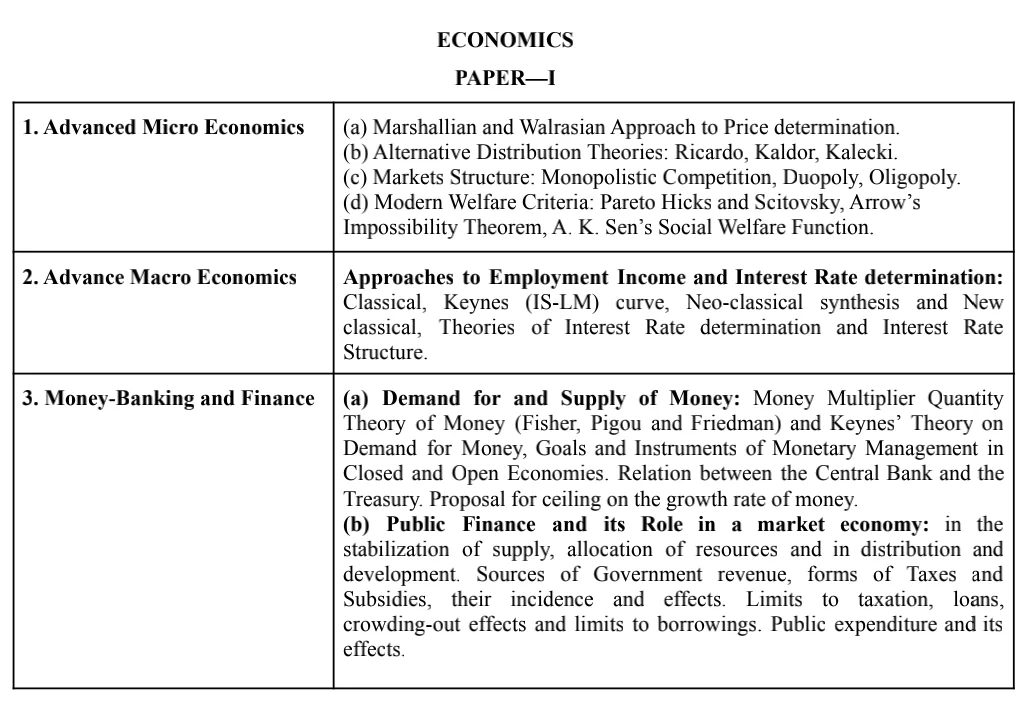
UPSC Economics Optional Paper 1 is worth 250 marks. It is structured across 5 core units that test advanced theoretical and analytical principles.
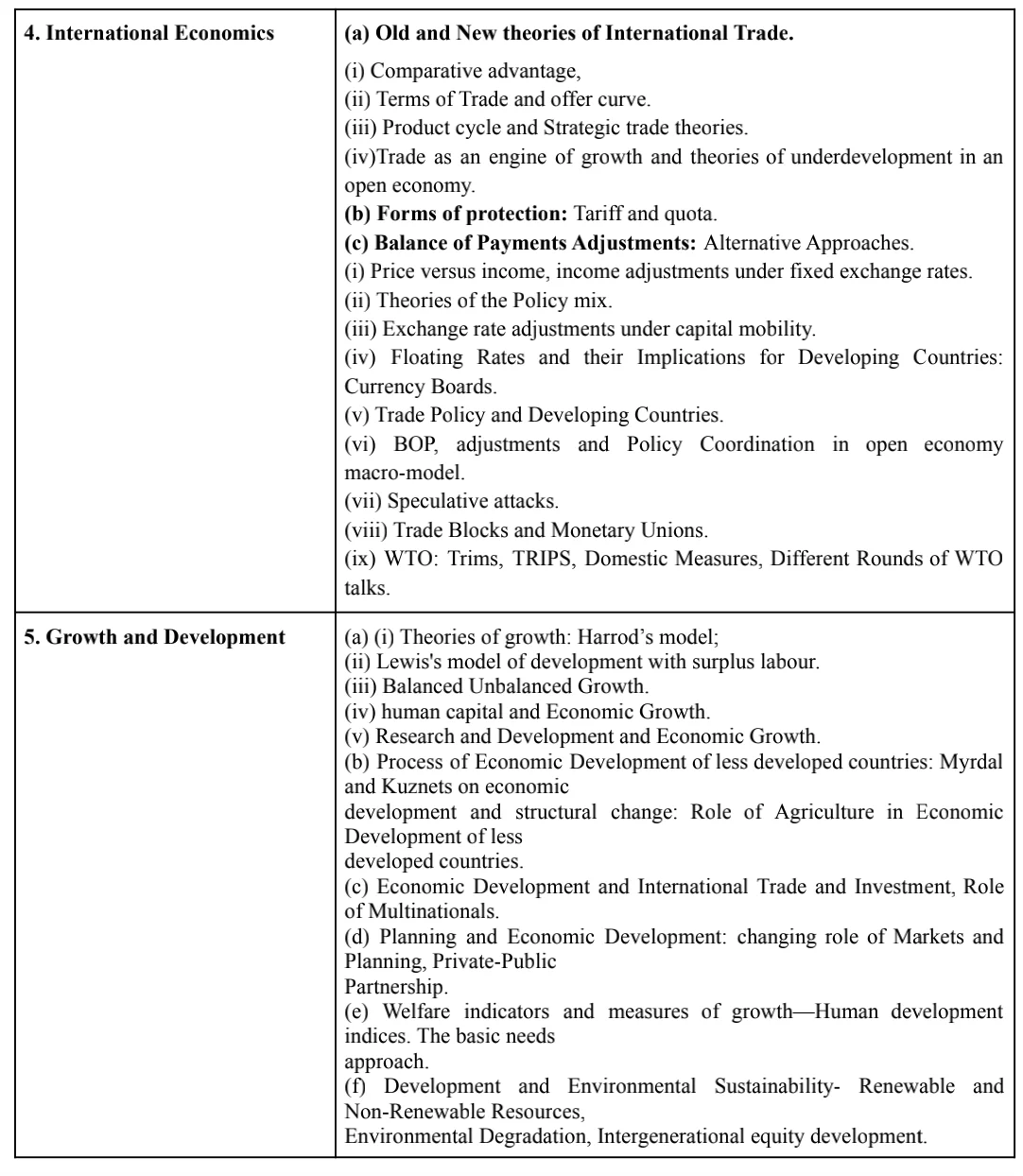
UPSC Economics Paper 1 Core Units
- Advanced Microeconomics
- Advanced Macro Economics
- Money-Banking and Finance
- International Economics
- Growth and Development
UPSC Economics Optional Paper 2
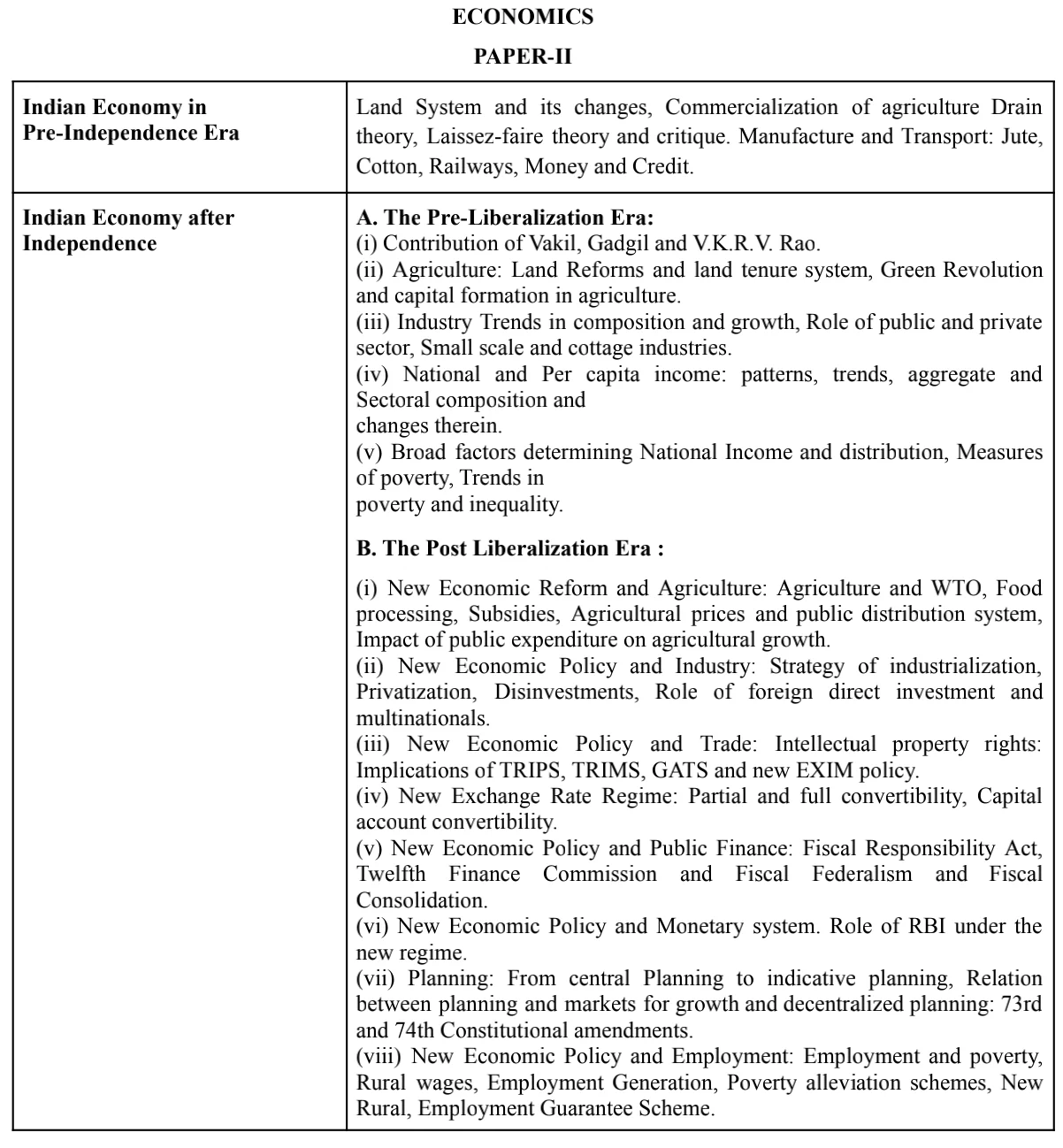
UPSC Economics Paper 2 is worth 250 marks. It focuses heavily on the Indian Economy, spanning the Pre-Independence era to the post-liberalization period, highlighting practical policy implementations and current economic trends.
Expected Question Weightage & Marks Distribution
Understanding the probable distribution of questions helps candidates focus their revision effectively on high-yield areas.
| Topics | Probable Number of Questions |
|---|---|
| Indian Economy | 40 to 45 questions |
| Micro and Macro Economics | 35 to 40 questions |
| International Economics | 15 to 20 questions |
| Money, Banking & Public Finance | 10 to 15 questions |
| Growth and Development | 9 to 10 questions |
| Statistics | 7 to 10 questions |
Frequently Asked Questions (FAQs)
Recommended Reads
- UPSC EPFO APFC vs EO/AO: Comprehensive Comparison Guide
- UPSC APFC Exam: Previous Year Papers, Benefits & Preparation Strategy
- UPSC Principal and Vice Principal Exam 2026: Syllabus & Pattern
- UPSC Principal and Vice Principal Recruitment 2026: Apply for 828 Vacancies
- UPSC CAPF AC Answer Key 2026 Released: Direct PDF Download Link & Scores
- UPSC CAPF AC Admit Card 2026 Released: Direct Link & Exam Schedule
Negative Marking & Net Score Calculator
Calculate your exact post-answer-key net marks after deducting 1/3rd or 1/4th negative penalty across SSC, UPSC, and State exams.
Never miss another exam update!
Get the fastest exam results, recruitment news, and educational guides delivered directly to your phone.