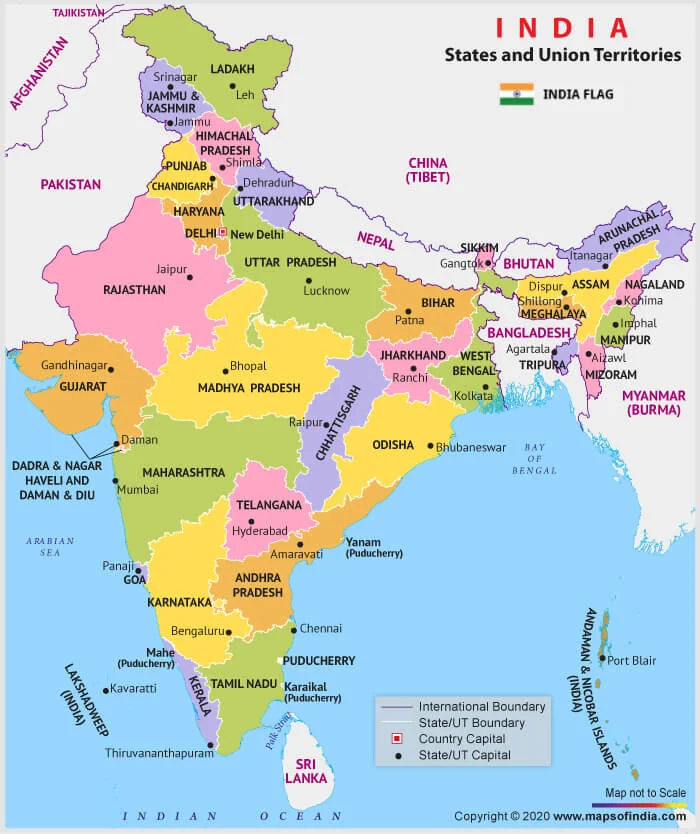
As the 7th largest country in the world by land area and the 2nd most populous nation globally, India features a dynamic and robust governance framework. Understanding this framework is crucial for aspirants preparing for competitive examinations or looking up Latest Government Jobs 2026. The nation currently comprises 28 states and 8 union territories, each contributing distinct cultures, geographical landscapes, and administrative nuances.
To build a solid foundation in General Knowledge (GK) 2026 Notes and Current Affairs 2026, it is essential to trace recent territorial reorganizations. For instance, following the abrogation of Article 370 on August 5, 2019, the former state of Jammu and Kashmir was bifurcated into two separate union territories, with Ladakh officially gaining status on October 31, 2019. Furthermore, on January 26, 2020, Daman and Diu merged with Dadra and Nagar Haveli into a single union territory.
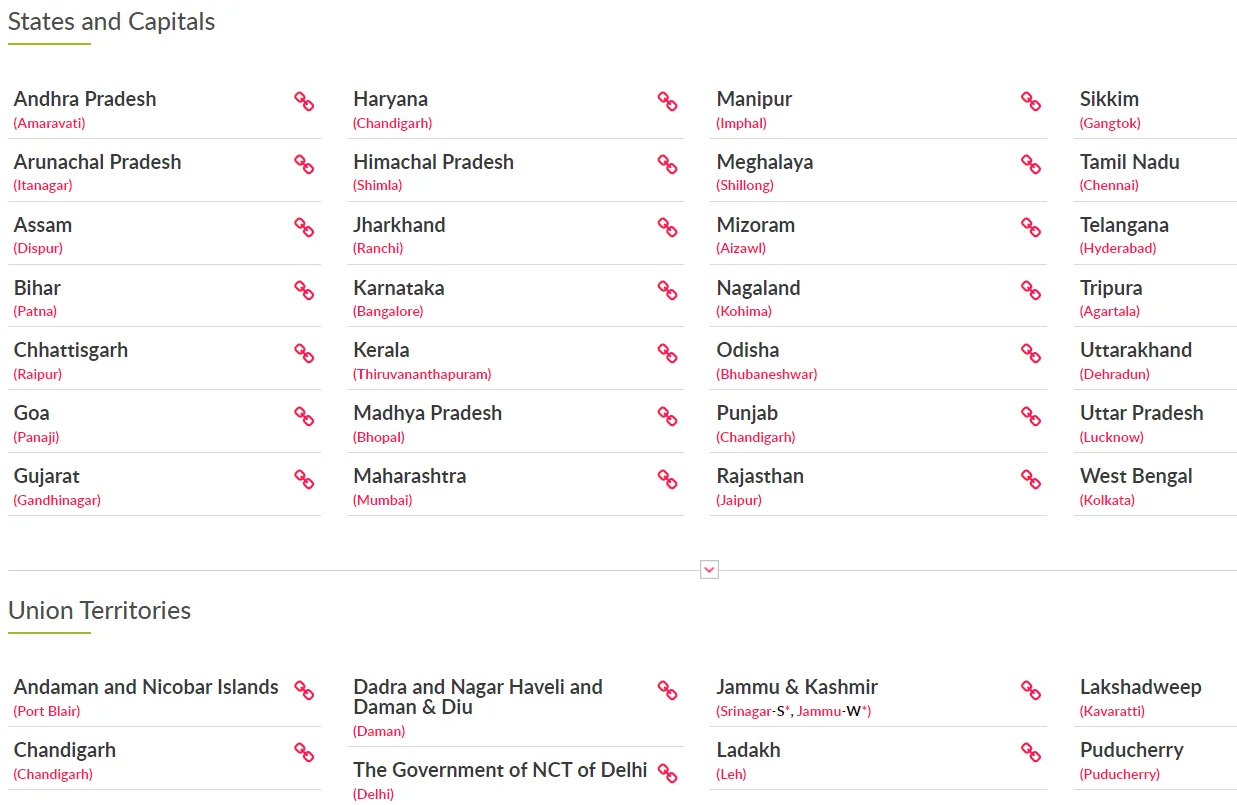
Administrative Structure Comparison
The division of powers between the states and the central authority defines India's federal structure. You can review the core differences below:
- States have their own administrative units and elected government; UTs are controlled by the Central Government.
- States are led by a Governor (executive) and Chief Minister (real head); UTs are led by the President (executive) and Lieutenant Governor (real head).
- The federal structure applies to states, while a unitary structure applies to UTs.
- States are administered by elected Chief Ministers; UTs are administered by an appointed Administrator (excepting Delhi, Puducherry, and Jammu & Kashmir).
For deeper insights into leadership roles, Check the Updated List of Indian Chief Ministers and Governors for 2026. Additionally, candidates should track Important Days and Dates related to regional formations.
List of Indian States, Capitals and Formation Date
Rajasthan is the largest state in India by land area, while Goa is the smallest state in India. Explore the comprehensive data table below detailing all 28 states:
| S.No. | State | Capital | Formation Date |
|---|---|---|---|
| 1 | Andhra Pradesh | Amaravati | 1 November 1956 |
| 2 | Arunachal Pradesh | Itanagar | 20 February 1987 |
| 3 | Assam | Dispur | 1950 |
| 4 | Bihar | Patna | 1950 |
| 5 | Chhattisgarh | Raipur | 1 November 2020 |
| 6 | Goa | Panaji | 30 May 1987 |
| 7 | Gujarat | Gandhinagar | 1 May 1960 |
| 8 | Haryana | Chandigarh | 1 November 1966 |
| 9 | Himachal Pradesh | Shimla | 25 January 1971 |
| 10 | Jharkhand | Ranchi | 15 November 2000 |
| 11 | Karnataka | Bengaluru | 1 November 1956 |
| 12 | Kerala | Thiruvananthapuram | 1 November 1956 |
| 13 | Madhya Pradesh | Bhopal | 1 November 1956 |
| 14 | Maharashtra | Mumbai | 1 May 1960 |
| 15 | Manipur | Imphal | 21 January 1972 |
| 16 | Meghalaya | Shillong | 21 January 1972 |
| 17 | Mizoram | Aizawl | 20 February 1987 |
| 18 | Nagaland | Kohima | 1 December 1963 |
| 19 | Odisha | Bhubaneswar | 1950 |
| 20 | Punjab | Chandigarh | 1 November 1966 |
| 21 | Rajasthan | Jaipur | 30 March 1949 |
| 22 | Sikkim | Gangtok | 16 May 1975 |
| 23 | Tamil Nadu | Chennai | 1 November 1956 |
| 24 | Telangana | Hyderabad | 2 June 2014 |
| 25 | Tripura | Agartala | 21 January 1972 |
| 26 | Uttar Pradesh | Lucknow | 24 January, 1950 |
| 27 | Uttarakhand | Dehradun | 9 November 2000 |
| 28 | West Bengal | Kolkata | 1950 |
For more details regarding territorial measurements, read Rajasthan is the largest state in India and Also Read: Comprehensive Guide to the Largest and Smallest States & UTs of India.
Indian Union Territories and Capitals
As noted, India has 8 Union Territories. Three of these union territories (Delhi, Puducherry, and Jammu and Kashmir) maintain their own legislative assemblies. Below is the complete table of union territories and their capitals:
| Union Territories Name | Capital |
|---|---|
| Andaman and Nicobar Islands | Port Blair |
| Chandigarh | Chandigarh |
| Dadra & Nagar Haveli and Daman & Diu | Daman |
| Delhi | New Delhi |
| Jammu and Kashmir | Srinagar (Summer) Jammu (Winter) |
| Lakshadweep | Kavaratti |
| Puducherry | Pondicherry |
| Ladakh | Leh |
Indian States with Their Specialities
Each state in India boasts unique cultural, geographical, and historical attributes. Review the specializations of prominent states below:
| Indian States | Specialisation |
|---|---|
| Andhra Pradesh | Andhra Pradesh is known for its spicy cuisine, historical sites like Charminar and Golconda Fort in Hyderabad, and rich culture in art, music, and dance. |
| Arunachal Pradesh | Arunachal Pradesh is renowned for its breathtaking landscapes, diverse tribal cultures, and the Tawang Monastery, one of the largest monasteries in India. |
| Assam | Assam is famous for its tea plantations, Kaziranga National Park (home to the one-horned rhinoceros), Bihu dance, and traditional silk weaving. |
| Bihar | Bihar is known for its historical significance, including the ancient city of Patliputra, Buddhist pilgrimage sites like Bodh Gaya, and Madhubani art. |
| Chhattisgarh | Chhattisgarh is recognized for its tribal heritage, rich mineral resources, and the Chitrakote Waterfall, often called the "Niagara of India." |
| Delhi | Delhi is famous for iconic landmarks such as India Gate and the Istana representing the country's past difficulties as well as its future hopes. |
| Goa | Goa is famous for its beautiful beaches, vibrant nightlife, unique blend of Indian and Portuguese cultures, and seafood cuisine. |
| Gujarat | Gujarat is renowned for its industrial and business prowess, the Rann of Kutch desert, vibrant festivals like Navaratri and Diwali, and the Sabarmati Ashram associated with Mahatma Gandhi. |
| Haryana | Haryana is known for its agricultural productivity, being a hub for industries, and Chandigarh, a well-planned city known for its architecture and urban design. |
| Himachal Pradesh | elebrated for its picturesque hill stations, adventure tourism, serene landscapes, and the Dalai Lama's residence in Dharamshala. |
| Jharkhand | Jharkhand is rich in mineral resources, known for its tribal culture, and home to the Betla National Park. |
| Karnataka | Karnataka is distinguished as the "Silicon Valley of India," known for its IT industry, historical sites like Hampi, and traditional dance forms like Bharatanatyam. |
| Kerala | Kerala is famous for its backwaters, Ayurveda practices, lush greenery, and the highest literacy rate in India. |
| Maharashtra | Maharashtra is also known as financial and entertainment capital, Bollywood film industry, historical landmarks like Gateway of India, and culinary delights like Vada Pav. |
| Manipur | Celebrated for its traditional dance forms like Manipuri dance, Loktak Lake, and vibrant festivals. |
Important Points Related to Indian States
| State | Union Territories |
|---|---|
| The state has its own administrative units with their own elected government. | Union Territories are constituent units which are controlled and administered by the Central Government. |
| The Executive Head is the Governor | The Executive Head is the President |
| The relationship with the Centre is Federal. | Unitary with the Centre. i.e. all the powers rest in the hands of the Union. |
| Administered by the Chief Minister and elected by the people. | Administered by the Administrator which is appointed by the President. ( except Delhi, Puducherry and Jammu & Kashmir) |
| The Chief Minister is the real head. | The lieutenant is the real head. |
Frequently Asked Questions (FAQs)
Recommended Reads
- AIIMS NORCET 11 Prelims Exam City 2026: Release Date, Steps & Details
- AP TET Response Sheet & Initial Answer Key 2026 Released: Check Scores & Raise Objections
- Bank of Baroda LBO Previous Year Papers: Benefits & Strategy
- BPSC TRE 4.0 2026: Major Changes, Exam Pattern, and Vacancy Details
- CPCB Recruitment 2026: Apply for 51 Contractual Posts Under SER Phase III
- Bank of Baroda LBO Salary 2026: Structure, Allowances & Growth
CGPA to Percentage Calculator
Convert your college 10-point CGPA or SGPA to equivalent percentage using official university multiplication formulas.
Never miss another exam update!
Get the fastest exam results, recruitment news, and educational guides delivered directly to your phone.