Choosing the right optional subject is a critical decision for candidates preparing for the UPSC CSE (Civil Service Examination). Among the wide array of choices available on the Optional Subject list, Anthropology has consistently emerged as a favorite among aspirants aiming to crack the IAS Mains Exam. Its popularity stems from concise study resources and a relatively focused, manageable syllabus compared to other humanities or science subjects.
To understand how this subject fits into the overall scheme, aspirants should regularly review updates on the UPSC Syllabus 2024 as well as foundational guidelines found in the UPSC Prelims Syllabus 2025 before diving deep into optional preparation.
Understanding Anthropology in the UPSC Context
Anthropology is fundamentally the study of people, past and present. It focuses on the human condition culturally and biologically through biology, cultural studies, archaeology, linguistics, and other social sciences. When mapping out your preparation strategy, keeping track of the official UPSC Syllabus for Mains & Optional Subject ensures you stay aligned with the commission's requirements.
Furthermore, analyzing past performance trends via the UPSC Cut Off [Previous Year]- Click to Check can offer valuable insights into scoring patterns. For those motivated by career outcomes, reviewing details such as Check UPSC IAS, IPS, IRS & IFS Salary provides a great morale boost during rigorous study phases.
Anthropology Optional Syllabus Paper 1 Sections
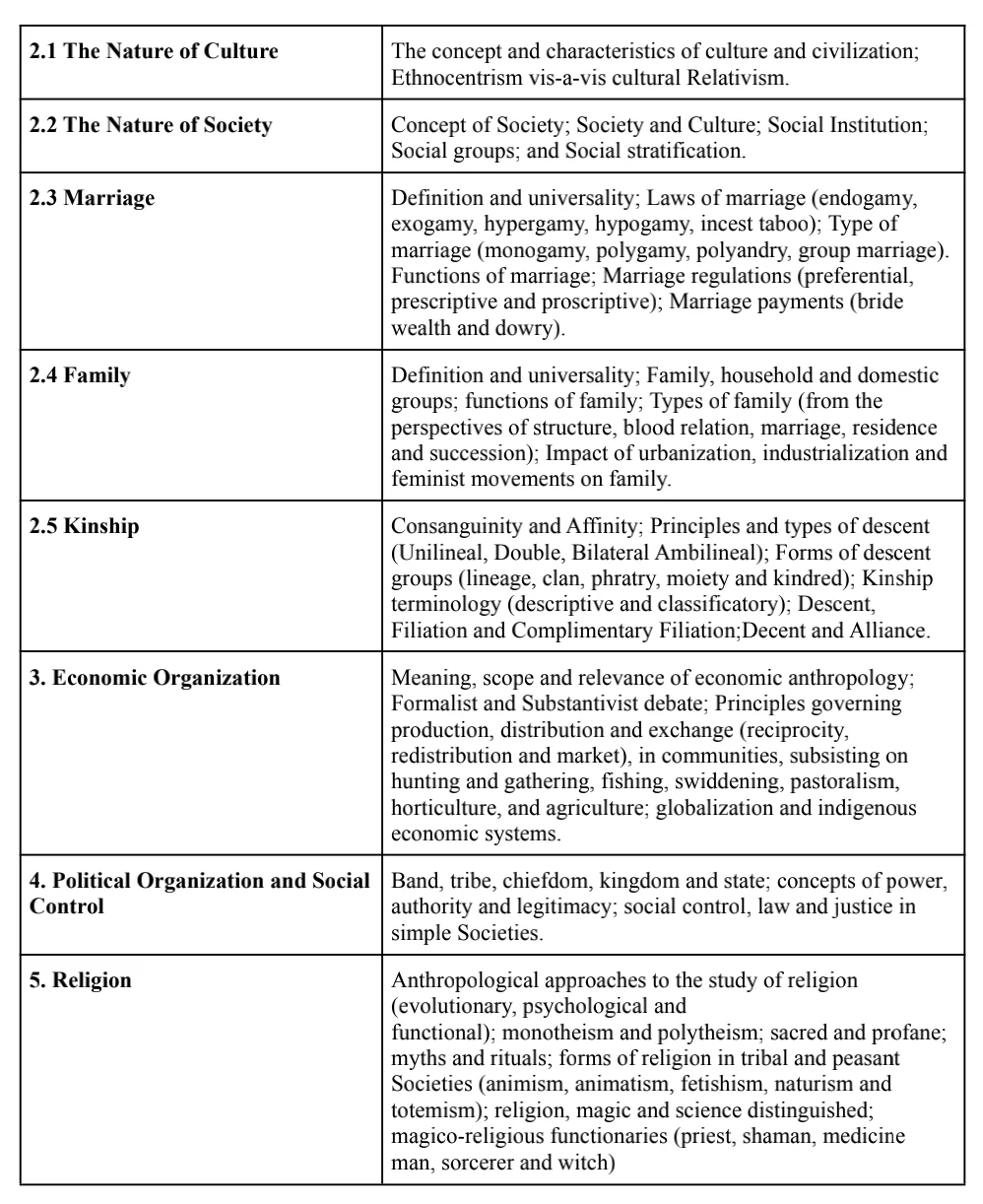
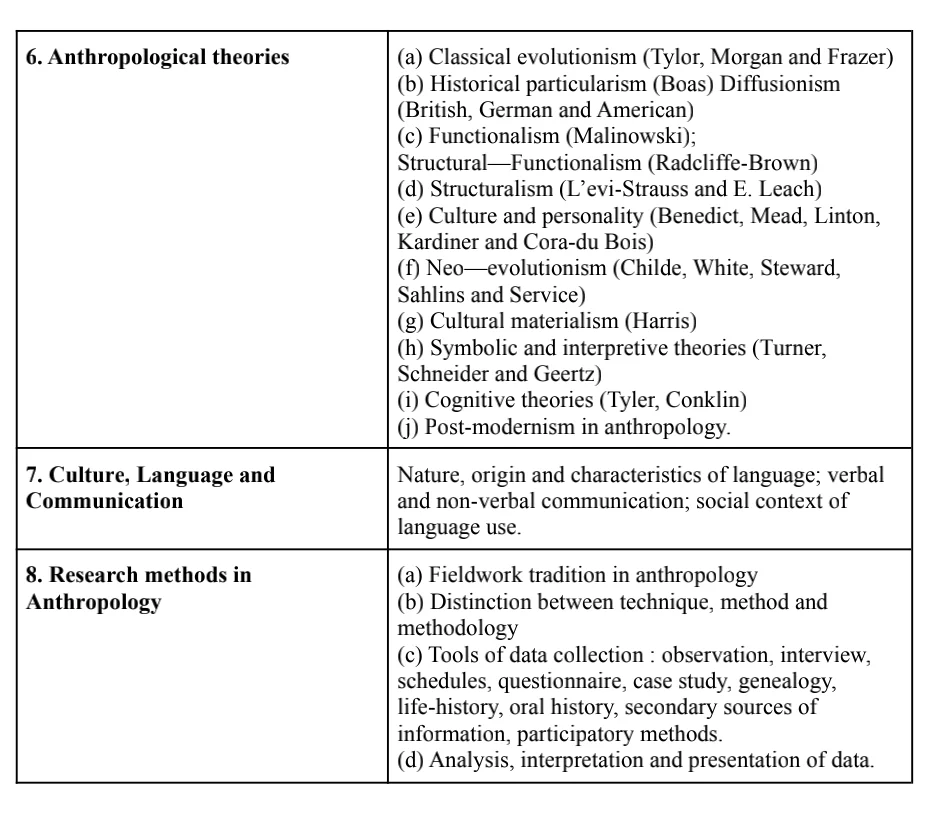
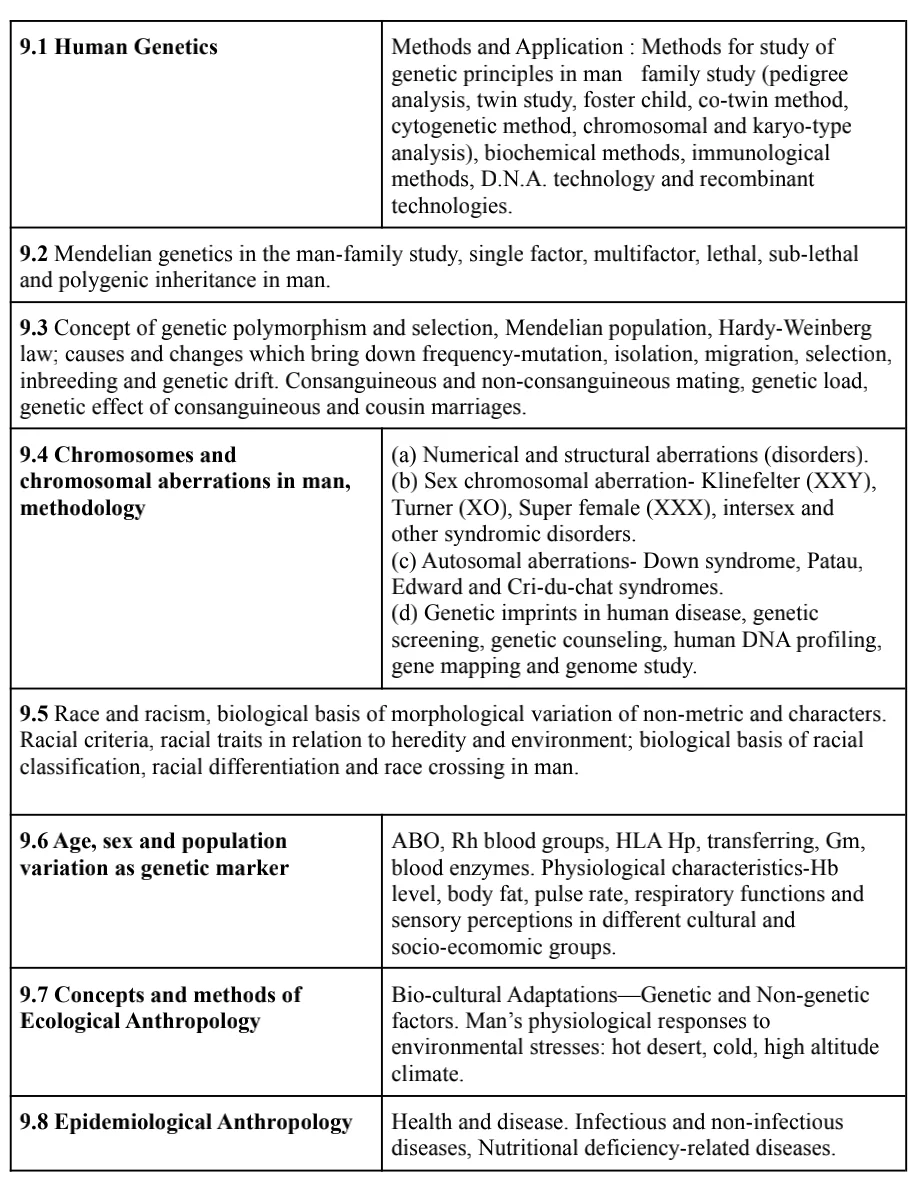
The UPSC Anthropology syllabus for Paper 1 is structured into 12 core sections covering biological and socio-cultural dimensions.
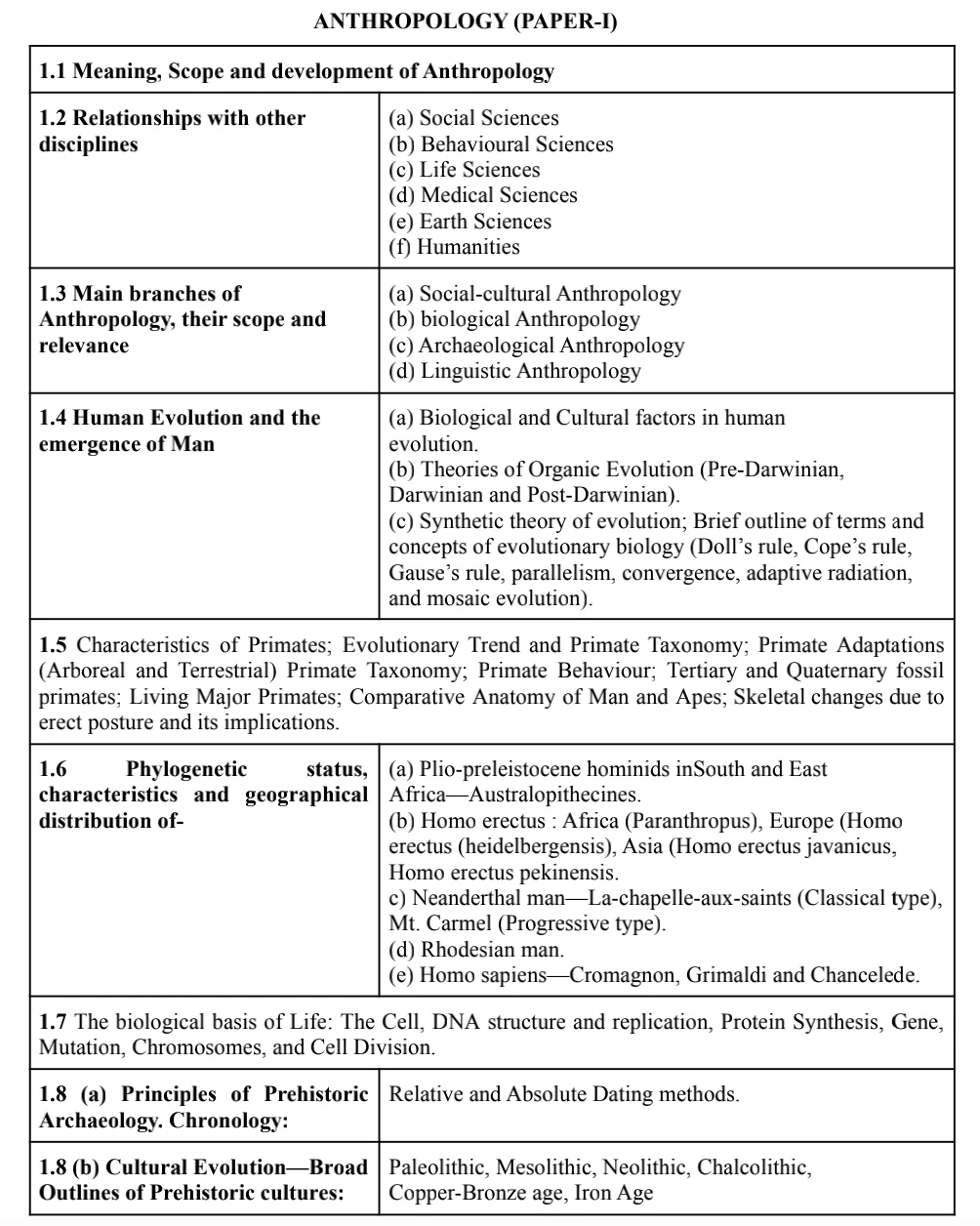
- Meaning, Scope and development of Anthropology, Relationships with other disciplines, Main branches of Anthropology, their scope and relevance, Human Evolution and the emergence of Man, The biological basis of Life, Principles of Prehistoric Archaeology. Chronology, Cultural Evolution.
- Nature of Culture, Society, Marriage, Family, Kinship
- Economic Organization
- Political Organization and Social Control
- Religion
- Anthropological theories
- Culture, Language and Communication
- Research methods in Anthropology
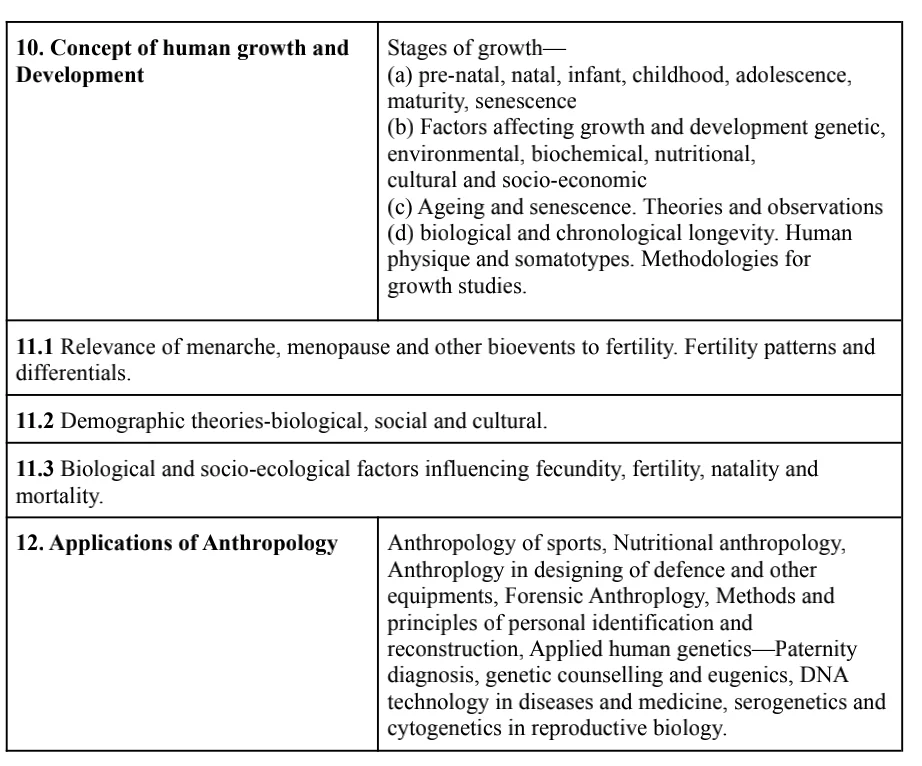
- Human Genetics
- Concept of human growth and Development
- Relevance of menarche, menopause and other bioevents to fertility. Fertility patterns and differentials.
- Applications of Anthropology
Anthropology Optional Syllabus Paper 2 Sections
The UPSC Anthropology syllabus for Optional Paper 2 is systematically divided into 9 specialized units focusing primarily on Indian society, culture, and tribal dynamics.
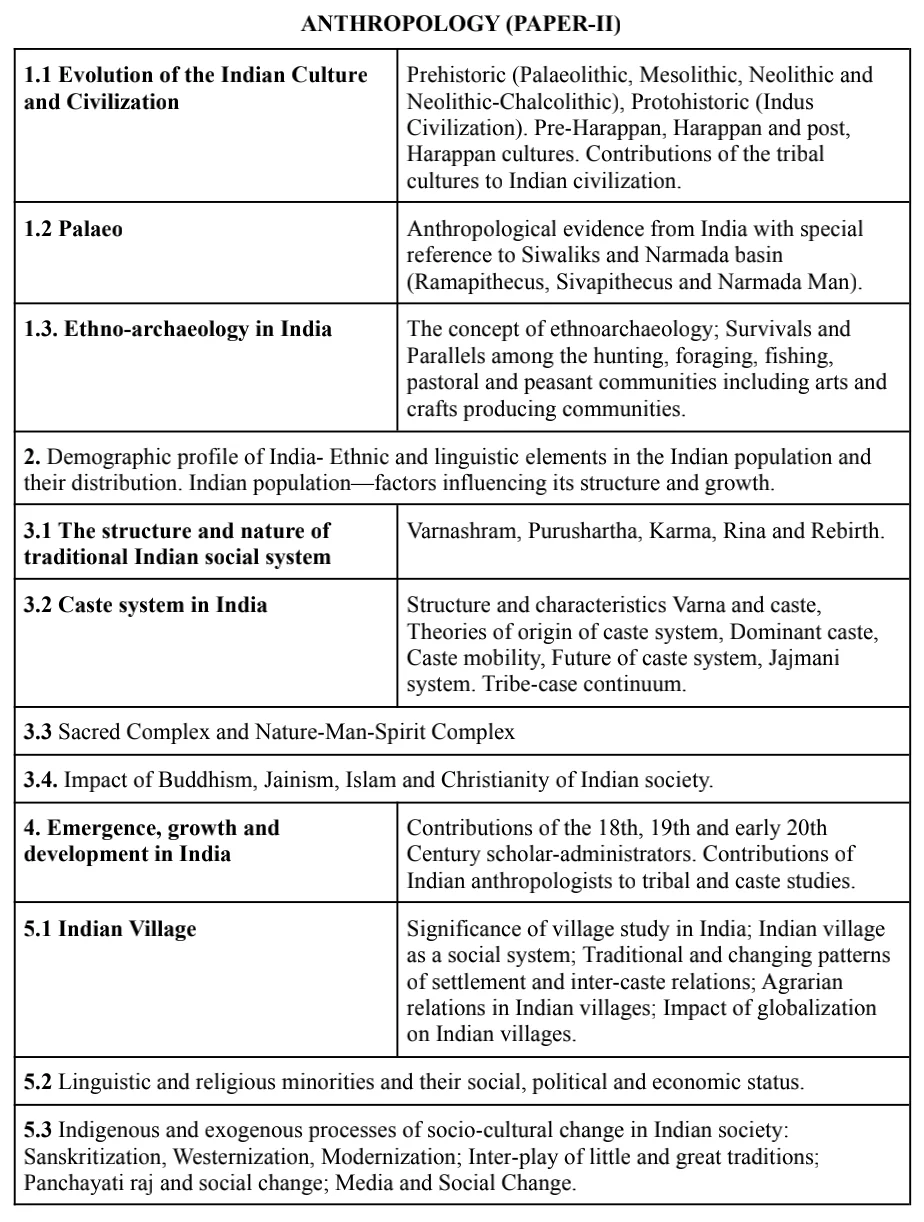
- Evolution of Indian Culture & Civilization, Palaeo, Ethno-archaeology in India
- Demographic Profile of India
- Structure & Nature of Traditional Indian Social System, Caste System in India, Sacred Complex and Nature-Man-Spirit Complex, Impact of Buddhism, Jainism, Islam and Christianity of Indian society.
- Emergence, growth and development in India
- Indian Village, Linguistic and religious minorities and their social, political and economic status, Indigenous and exogenous processes of socio-cultural change in Indian society.
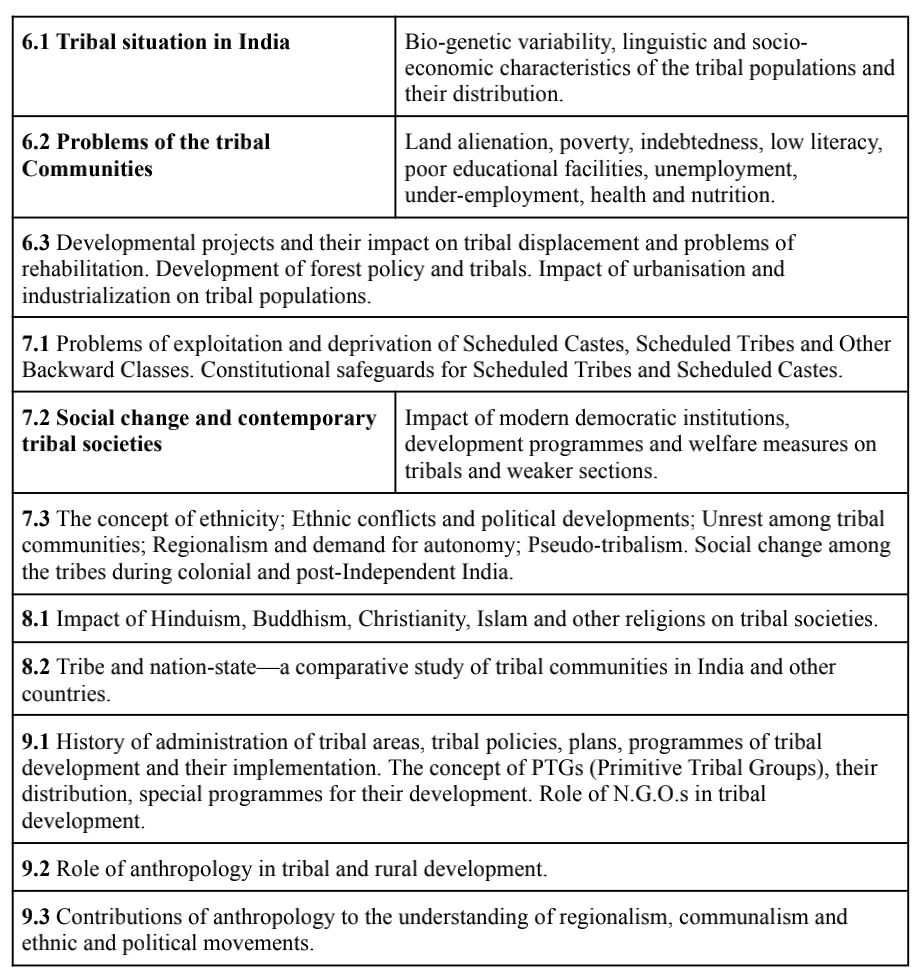
- The tribal situation in India, Problems of the tribal Communities
- Problems of exploitation and deprivation of SC, ST and OBC, Social change and contemporary tribal societies.
- Tribe and nation-state, Impact of Hinduism, Buddhism, Christianity, Islam and other religions on tribal societies.
- History of administration of tribal areas, Role of anthropology in tribal and rural development.
Next Steps for Candidates
After thoroughly reviewing the syllabus structure for both papers, candidates should proceed to gather standard textbooks, previous years' question papers, and test series. Establish a structured timetable to cover physical anthropology, socio-cultural theories, and Indian anthropology systematically. Consistent answer writing practice and incorporating case studies will significantly boost your Mains score.
Frequently Asked Questions (FAQs)
Recommended Reads
- AIIMS NORCET 11 Prelims Exam City 2026: Release Date, Steps & Details
- AP TET Response Sheet & Initial Answer Key 2026 Released: Check Scores & Raise Objections
- Bank of Baroda LBO Previous Year Papers: Benefits & Strategy
- BPSC TRE 4.0 2026: Major Changes, Exam Pattern, and Vacancy Details
- CPCB Recruitment 2026: Apply for 51 Contractual Posts Under SER Phase III
- Bank of Baroda LBO Salary 2026: Structure, Allowances & Growth
Negative Marking & Net Score Calculator
Calculate your exact post-answer-key net marks after deducting 1/3rd or 1/4th negative penalty across SSC, UPSC, and State exams.
Never miss another exam update!
Get the fastest exam results, recruitment news, and educational guides delivered directly to your phone.