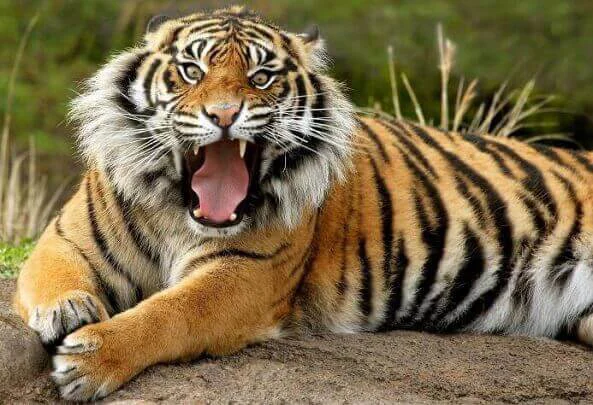
The Royal Bengal Tiger (Panthera tigris tigris) stands as a proud symbol of India’s wildlife heritage. Officially adopted as the national animal in April 1973, this majestic predator represents the nation's commitment to conservation and biodiversity. With India home to approximately 80 percent of the global wild tiger population, the species is deeply embedded in the cultural and spiritual fabric of the country, notably appearing in Hindu mythology as the powerful vehicle (vahana) of Goddess Durga.
Scientific Classification
Understanding the biological foundation of the Bengal tiger is essential for effective conservation efforts. The table below outlines its taxonomic classification:
| Rank | Classification |
|---|---|
| Kingdom | Animalia |
| Phylum | Chordata |
| Clade | Synapsida |
| Class | Mammalia |
| Order | Carnivora |
| Family | Felidae |
| Genus | Panthera |
| Species | Panthera tigris |
| Subspecies | Panthera tigris tigris |
Where is the National Animal Found?
The Bengal tiger is highly adaptable, inhabiting a diverse range of ecosystems across the Indian subcontinent. Prospective wildlife enthusiasts and researchers should check these primary habitats:
- Grasslands and dry scrub forests (notably Ranthambore, Rajasthan)
- Tropical and subtropical rainforests (such as Corbett, Uttarakhand, or Periyar, Kerala)
- Mangrove swamps (notably the Sunderbans)
- Deciduous forests, both wet and dry (found in Kanha, Madhya Pradesh, or Simlipal, Odisha)
Conservation History: Project Tiger
Before 1973, the lion was considered the national animal of India. However, the dwindling numbers of the tiger necessitated urgent action. Launched by Prime Minister Indira Gandhi, Project Tiger was initiated in April 1973 to prevent extinction and preserve critical habitats. With Kailash Sankhala serving as the first director, the initiative successfully scaled to manage over 50 tiger reserves nationwide.
For those interested in the broader context of the nation's identity, you may explore the national symbols or view the National Symbols of India- Check Full List. Additionally, enthusiasts can review India States/Union Territories and their State Animals- Check Full List to understand the regional representation of wildlife.
Global Comparison of National Animals
| Countries | National Animal |
|---|---|
| Afghanistan | Marco Polo Sheep |
| Australia | Kangaroo |
| Brazil | Jaguar |
| India | Royal Bengal Tiger |
| Pakistan | Markhor |
| Russia | Russian Brown Bear |
| United States of America | American Bison |
Frequently Asked Questions (FAQs)
Recommended Reads
- Headquarters of National and International Organizations: Complete Preparation Guide
- Indian Banyan (Ficus benghalensis): National Tree of India & Its Wonders
- India's Linguistic Landscape: Official Languages & Scheduled Languages
- 17 Official National Symbols of India: A Complete Guide to National Pride
- India's Protected Wilderness: A Complete Guide to National Parks and Wildlife Sanctuaries
- Is Field Hockey India's National Game? Fact vs. Fiction Explained
Exam Photo & Signature Resizer (20KB - 50KB)
Resize passport photo & signature to 20-50KB with Name & Date of Photo (DOP) strip or combine them in 1-click.
Never miss another exam update!
Get the fastest exam results, recruitment news, and educational guides delivered directly to your phone.